Google has started rolling out a native server-to-server integration between Shopify and GA4. If you already have the Google and YouTube app installed on your Shopify store, this will activate automatically in July 2026. No setup required.
Google Analytics email announcing the Shopify server-to-server integration:
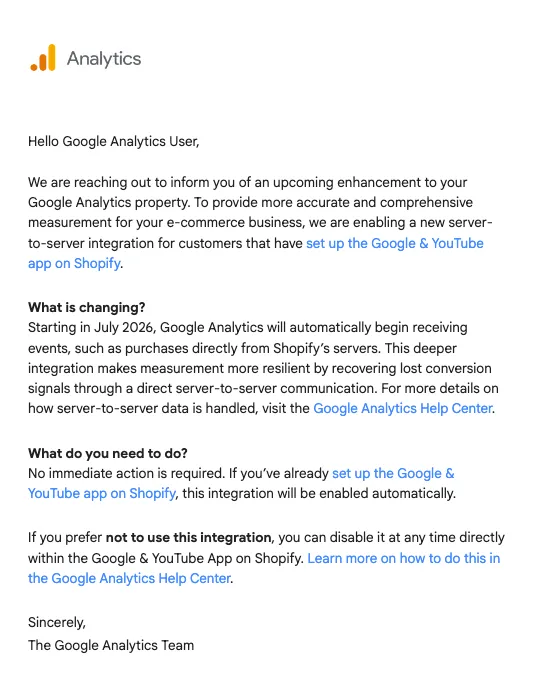
Source: Google Analytics Help Center
That sounds like a clean upgrade. It mostly is. But there are a few things worth understanding before you assume your measurement problems are solved.
Why this matters
Standard GA4 tracking on Shopify has always had a structural weakness. When a customer completes a purchase, the tracking fires from their browser on the Thank You page. That means it can fail if:
- The customer uses Safari with ITP or a privacy-focused browser like Brave
- An ad blocker prevents the tag from loading
- The customer closes the tab immediately after clicking Submit
Industry estimates suggest client-side tracking misses between 10 and 20 percent of actual Shopify revenue. The data you see in GA4 has never matched your actual order numbers, and that gap makes conversion rate optimization unreliable.
The new server-to-server integration fixes this for the most critical event. When Shopify processes an order, it sends the purchase event directly to GA4 via the Data Manager API, bypassing the browser entirely.
What the integration actually does
A few specifics worth knowing:
- Only the purchase event is covered. Upper-funnel events like
view_itemandadd_to_cartstill rely on browser tagging. Google has said support for those is planned, but it is not part of this rollout. - Deduplication is handled automatically. If both the browser and the server send the same purchase, GA4 matches on transaction ID and counts it once.
- It only covers Google's ecosystem. If you are running paid media on Meta, TikTok, or Pinterest, you still need a separate server-side setup for those channels. This integration does not help there.
What it does not fix
This is where it gets important.
Attribution can still break. Because session_start and add-to-cart events still come from the browser, an ad blocker can sever the session ID before the server records the purchase. GA4 will capture the revenue, but may not attribute it to the right campaign.
GA4 and Shopify revenue will still not match perfectly. Google has confirmed this. Differences in attribution models, timezone handling, and refund logic mean there will always be some gap.
Consent obligations still apply. Server-to-server tracking is not a workaround for consent. If you are in the UK or EU, you still need proper opt-in consent and Consent Mode v2. Moving data collection to the server does not change your legal obligations.
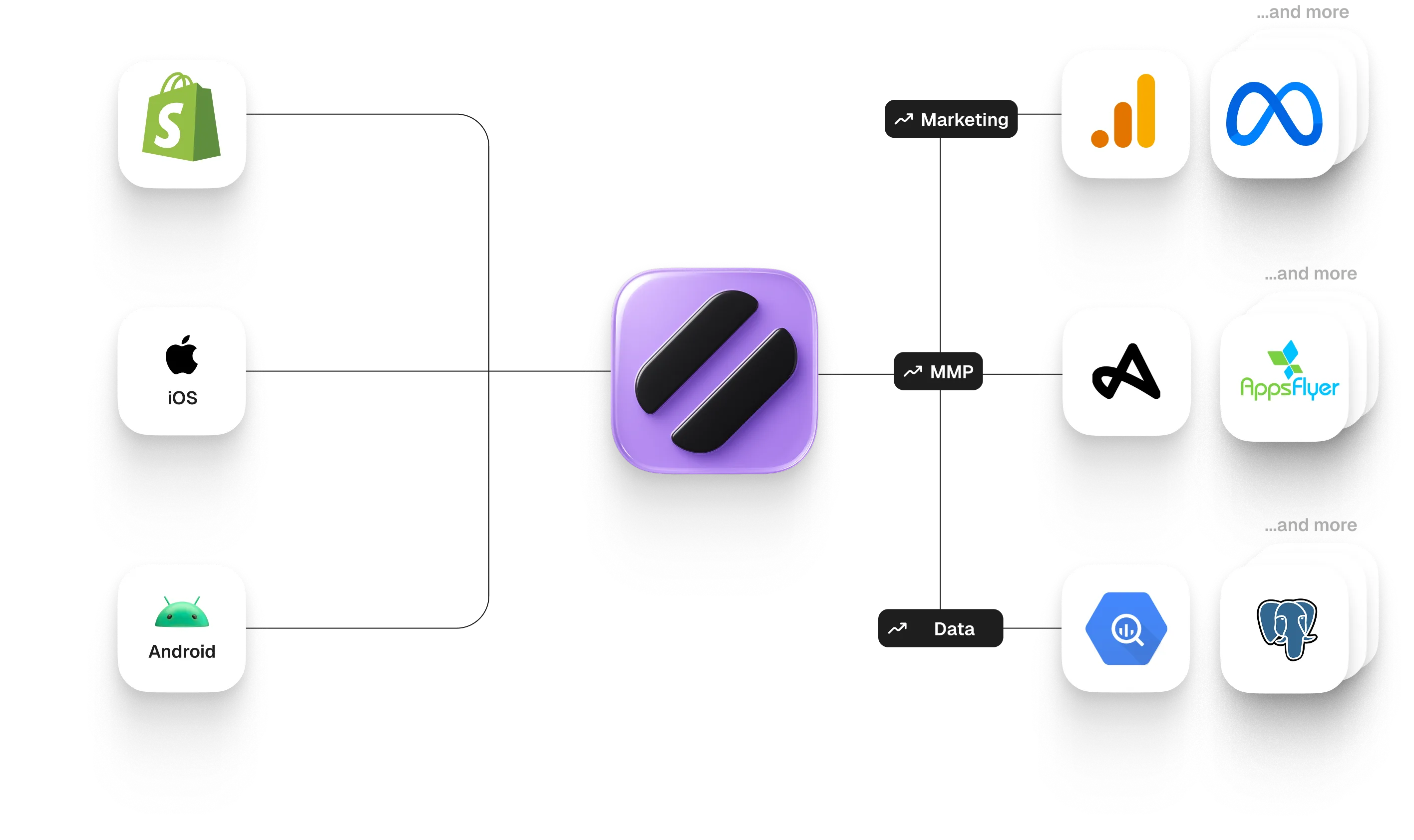
If you want to track all your events server-side with 1PD attribution:
- Go to our Shopify app
- Install Hardal to your store
One thing to flag before July
When the integration activates and starts recovering previously lost purchases, your GA4 conversion volume will go up. This is not a spike in actual sales. It is a measurement improvement.
If you run year-over-year reports in August 2026 against August 2025, the numbers will look inflated. Make sure your team and stakeholders understand why before that data lands.
If you have a custom GTM setup
If your store uses a fully custom Google Tag Manager implementation and you do not want Shopify's native integration interfering with it, you can disconnect it. Inside the Google and YouTube app settings, click Disconnect next to your GA4 property. Be aware that this removes the entire app integration, so you will be responsible for tracking all e-commerce events manually through GTM.
Want to understand how this update affects your specific setup? We are running a free webinar to walk through what this change means in practice, how to audit your current tracking, and how to close the remaining gaps across all your ad channels.
Register for the Webinar: Shopify x GA4 Server-to-Server Explained