What is web-to-app?
Web-to-app describes a journey from a mobile website into a native app. A person might find a product through search, open its mobile page, then tap a link that opens the same product in the app. If the app is not installed, the link may lead to an app store and a useful first screen after installation.
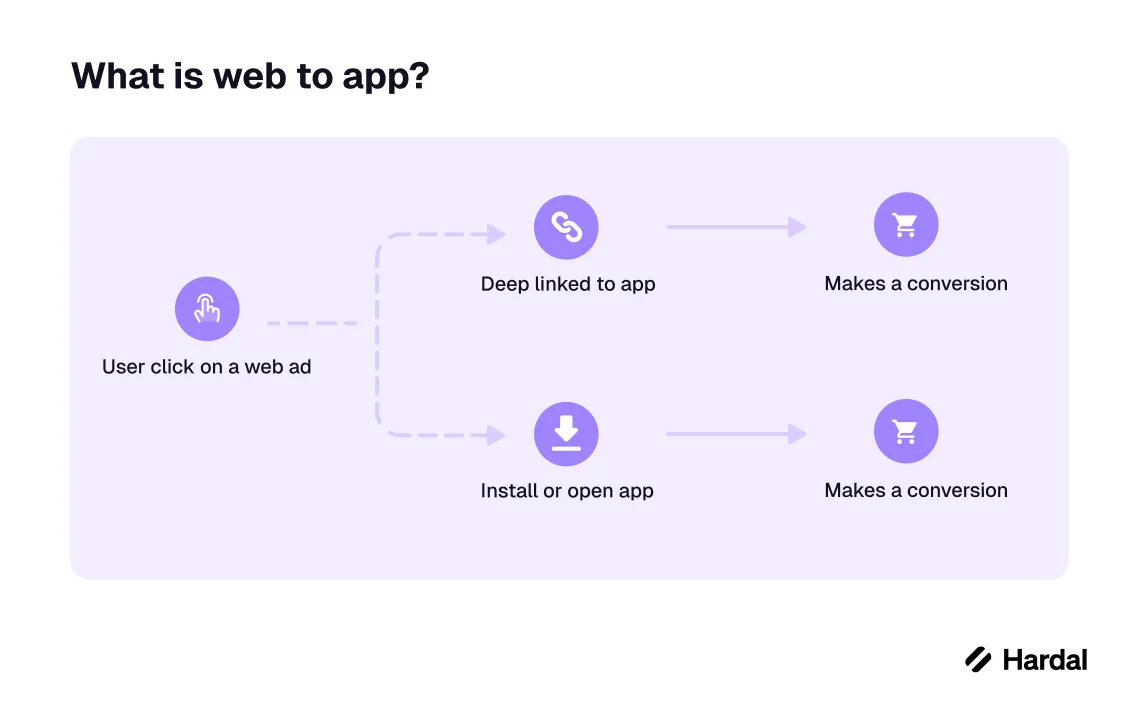
What makes the handoff work?
The website and app need a shared way to identify the intended content. On iOS, Universal Links can open verified web URLs in an app. Android App Links provide a similar route on Android. A fallback web page should remain useful when the app cannot open the link.
For new installs, deferred deep linking tries to preserve the destination through the app store. That context is not always available because of platform and privacy limits. Test the journey on installed and uninstalled devices instead of assuming every person will land on the exact same screen.
How do you measure it?
Count each stage separately: link impressions, clicks, app opens, installs, and in-app conversions. Connect stages only when a permitted identifier or platform attribution result supports the link. This avoids claiming a complete cross-device path from incomplete signals.
The goal is a clear route to the task the person started on the web, with measurement that explains where the handoff succeeds or breaks.
How Hardal handles it
Hardal measures websites and mobile apps in one setup, so a web visit and the app activity that follows can be analysed together. See web and mobile measurement.
Related terms: App Tracking Transparency, SKAdNetwork, Attribution