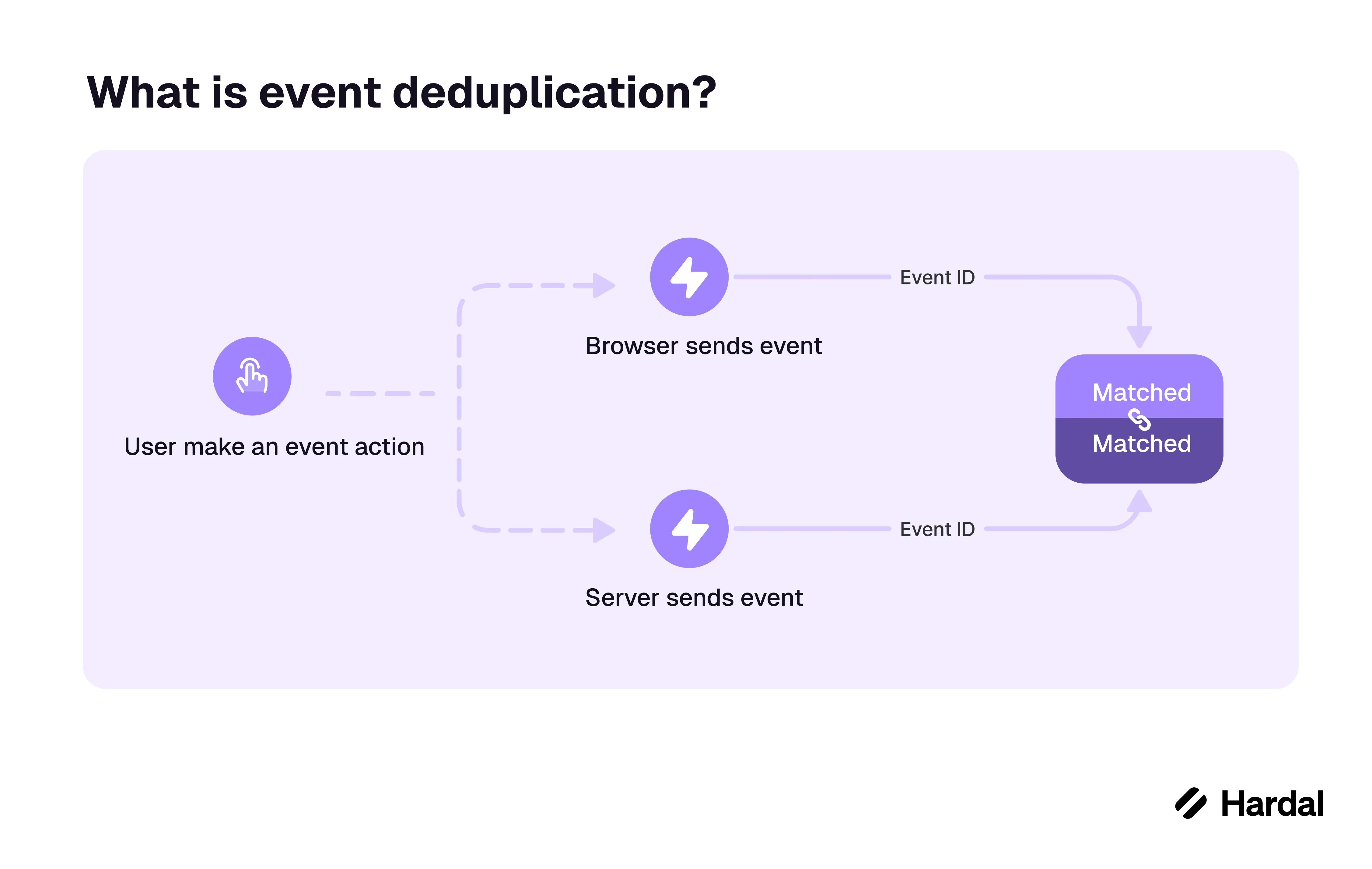
What is Event Deduplication?
Event deduplication is the process of ensuring that the same event, sent from both browser-based tracking and server-side APIs, is only counted once in your reporting. This is essential for accurate ad performance measurement, reliable conversion tracking, and effective campaign optimization.

Why Event Deduplication Matters
Without proper deduplication, you may experience:
- Inflated conversion rates: The same purchase counted twice artificially boosts your conversion metrics
- Inaccurate ROAS calculations: Duplicate events lead to misleading return on ad spend figures
- Poor attribution: Over-reporting can misguide optimization and budget allocation decisions
Understanding Event Sources
Browser-Based Tracking (Pixels)
JavaScript-based tracking that monitors user actions on your website. Can be blocked by ad blockers, browser settings, or connectivity issues.
Server-Side Tracking (APIs)
Server-to-server event sharing that sends data directly from your server to advertising platforms. More resilient to browser limitations and provides better data completeness.
When Deduplication is Needed
Deduplication Required: When you send the same event (e.g., Purchase) from both browser and server sources.
Deduplication Not Required: When you send different events from each source (e.g., AddToCart from browser, Purchase from server).
Key Implementation Requirements
For effective deduplication, you need:
- Matching event names across both sources
- Identical event IDs for the same conversion
- Consistent timing between browser and server events
- Proper parameter formatting across all platforms
Best Practices
- Use existing identifiers like order numbers or transaction IDs as event IDs
- Maintain consistency in event naming and ID generation
- Test your implementation using platform-specific testing tools
- Monitor deduplication status regularly
- Consider using e-commerce platform integrations that handle deduplication automatically
FAQ: Event Deduplication
What is event deduplication?
Event deduplication ensures that the same conversion event sent from both browser-based pixels and server-side APIs is only counted once in your advertising reports, preventing inflated metrics and ensuring accurate campaign performance measurement.
When do I need to implement event deduplication?
You need deduplication when sending the same event (like Purchase or Lead) from both browser-based tracking (pixels) and server-side APIs. If you're sending different events from each source, deduplication isn't necessary.
How does Meta's Conversions API (Signals Gateway) handle event deduplication?
Meta deduplicates events when they have matching event names and event IDs between Meta Pixel and Conversions API. The first received event is kept, and deduplication can also work with external_ID or fbp parameters as alternatives to event_id.
How does TikTok handle event deduplication?
TikTok requires identical event names and event_ids across Pixel SDK and Events API. Events within 5 minutes are merged (later event enriches the first), while events within 48 hours are dropped if they're duplicates.
What happens if I don't implement deduplication?
Without deduplication, the same conversion may be counted multiple times, leading to inflated conversion rates, inaccurate ROAS calculations, and misleading campaign optimization decisions that can waste your advertising budget.