What is App Tracking Transparency (ATT)?
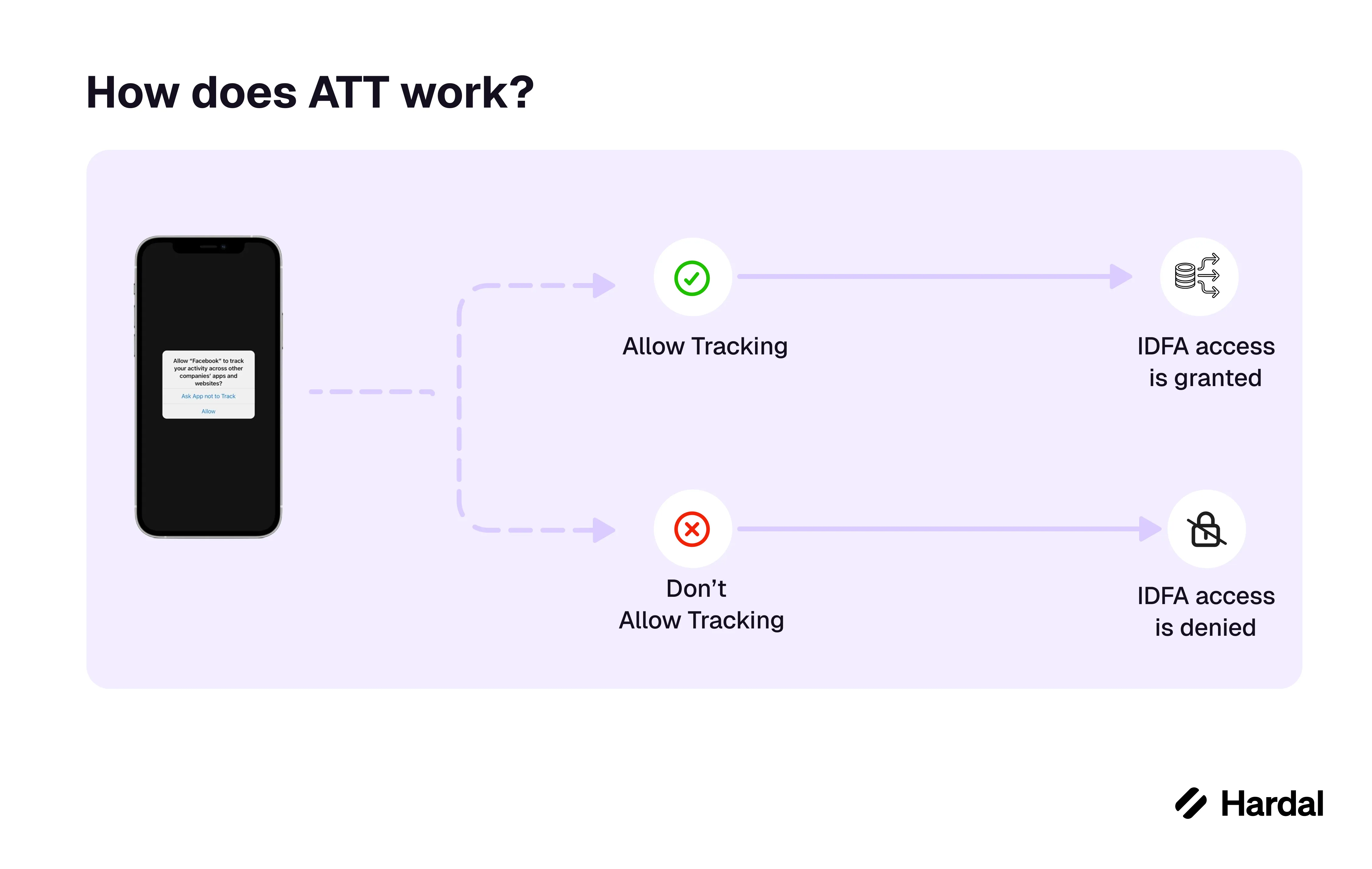
App Tracking Transparency is Apple's framework for requesting permission to track someone across apps and websites owned by other companies. An app that performs this type of tracking must request authorization through Apple's system prompt. Access to the Identifier for Advertisers (IDFA) for tracking also depends on that permission.
ATT does not cover every type of analytics inside an app. The relevant question is what data the app collects and whether it is linked with data from other companies for tracking, targeted advertising, or advertising measurement under Apple's rules.
How does the prompt work?
The app explains why it wants to track, then iOS shows the system permission prompt if the device settings allow the request. The app can read the authorization status and must respect it. When permission is denied, the app cannot access the IDFA for tracking or use another identifier to work around the choice.
What does this mean for measurement?
Advertisers may have fewer person-level signals for attributing app installs and conversions. Apple's SKAdNetwork and AdAttributionKit provide privacy-preserving attribution postbacks without granting cross-app tracking permission. Teams can also analyze permitted first-party app events and aggregate campaign results.
ATT permission is one control in a wider privacy setup. Collection and sharing must also follow the applicable law and the app's stated privacy practices.
How Hardal handles it
Hardal's mobile app tracking measures permitted first-party app events whether or not a person opts in to tracking, and supports SKAdNetwork for ad attribution.
Related terms: SKAdNetwork, Web-to-app, Attribution